“Earth provides enough to satisfy every man’s needs, but not every man’s greed.”
— Mahatma Gandhi
Here we go! The first post on my new Environment blog, NAShTYEarth. If you want to know more about this blog and a little bit about me please click on the “Introducing the Author, Me!” at the top, but I am going to go a little more in depth about myself and what my blog will consist of and be in the following.
19 years young and living everyday to the fullest. I grew up in a family of six including myself. You know how everyone always says that the youngest of the family gets the special treatment and never gets in as much trouble as the rest? Well, I am the youngest, and yes, it is all true. My dad is an accountant and my mom a nurse, so it was either do everything by the book, or make sure everyone is okay, either way, I had a wonderful childhood.
My parents really shaped me into who I am today. Love thy neighbor and love yourself was always being said around my house growing up, along with do the right thing when you’re supposed to do it every time, all the time. It hit me my sophomore year of high school, yes love yourself and your neighbor, but what about the Earth? Our environment? What about all of that? Everyone is worried about themselves and everyone around them, and that is why I am writing this blog. To stop the conversation happening between people about people, but a conversation with people about the world.
This blog will be covering a lot of different things, nothing where you need a PhD in environmental science to understand, but things that need to be talked about. A few examples of what will be talked about over the course of this blog:
Pollution, pollutants, and companies that are responsible for the largest amount of pollution
Current events
Laws regarding our environment
Places of natural beauty
Places of human destruction
People who are making a difference
What you can do to make a difference
etc.
There is a lot of information that will be presented that can be shocking, but there is always something YOU can do about it.
You may be wondering why I included other Environment blogs within my own blog. I am not here to be famous, or to make money, I am only here to inform and be a part of something I love. There are hundreds of other blogs out there related to mine or similar in their own distinctive way. I have included on my NAShTYEarth homepage a link to some of those other blogs because we do not do the exact same thing.
Every blog is a new story from a new perspective or different facts gathered from a different source. Each post is important in its own unique way so I will always support and use other blogs to help in my own, and support others in using my blog for references as well. Grist is an amazing blog that covers a variety of topics that I will not be covering that can be appealing to readers. An article that they have posted, “Is Fake Meat Getting to Much like the Real Thing?” explains the transition from red meat, to lab made meat from mushrooms! Very interesting and I will leave the link right below!
Another way that is different from my own is that I will be posting periodically. Boo, I know everyone wants to read a new blog everyday, but the anticipation will always keep you coming back! I will be doing one post a week for all of my readers out there and the days will vary! If you cannot handle the anticipation of my blogs to come out, TreeHugger, another exceptional blog about the environment, is always posting new articles with a variety of topics. Fun ways to stay in fashion without buying new clothes all the time and the secret language of crickets is always a good way to past the time while waiting on my posts! (Links below)
There you have it folks! The rundown for my very new Environmental Blog, NAShTYEarth. Please stay tuned for weekly updates and subscribe to never miss a post! Please feel free to leave comments and would love to hear from you what you would like to know so I can better cater to my audience! Thank you all so much! #1Earth
The thin blue lines that seperates life and death.
What is the Atmosphere?
The atmosphere is layer of gases surrounding the planet Earth and retained by the Earth’s gravity.
What Gases Make Up Our Atmosphere?
According to NASA, there are four main gases that make up our atmosphere.
Nitrogen – 78 percent
Oxygen – 21 percent
Argon – 0.93 percent
Carbon Dioxide – 0.04 percent
Trace amounts of neon, helium, krypton, hydrogen, and water vapor
This mixture of gases is commonly known as air.
Layers of the Atmosphere:
The Troposphere is the layer closest to the Earth’s surface. Ranging from about 4 to 12 miles up, clouds are formed in this layer.
The Stratosphere is the second layer that starts at about 12 miles up and ends at 31 miles high. The air here is about a thousand times thinner than at sea level, and jet aircrafts and weather balloons fly in this layer.
The Mesosphere starts at 31 miles high and extends to 53 miles high. The top of this layer is called the mesopause, it is the coldest part of Earth’s atmosphere reaching an average of minus 130 degrees fahrenheit. This layer is hard to study, but scientist know that meteors burn up in this layer.
The Thermosphere extends from 56 miles to between 310 and 620 miles. temperatures can get up to 2,700 degrees fahrenheit. This layer is where the International Space Station orbits the Earth. This is also the layer where we see the Aurora Borealis and Aurora Australis.
The final layer is the Exosphere where we see the dispersed particles of hydrogen and helium and it begins to turn to outer space.
– Dr. Bradstock, director of the Center for Environmental Risk Management of Bushfires
Overview:
Since September of 2019, bushfires have been ravishing through Australia. Causing destruction and death over all forms of life. Firefighters from all over the world have gathered to fight these fires and try and save what is left of the land down under. These bushfires have caused billions of dollars worth of damages and displaced families from homes, animals from their habitats, and put the whole country of Australia on guard for what could possible happen next. So, what should we know about these fires? What can we do to help from almost 10,000 miles away?
Vocab term: Bushfire – a fire in scrub or a forest, especially one that spreads rapidly.
Where are these bushfires at in Australia?
Every state/territory has reported a bushfire this summer
Largest fires are in…
New South Wales
Victoria
(Eastern/Southern Coast)
Pictured below shows what we can see of the fires via satellite and a map of where these fires are located.
Bushfires are notoriously started by lightning or a spark in a dry, brush filled area of a forest. However, some bushfires are started maliciously. There are a reported 52,000 – 54,000 bushfires every year in Australia. Arson accounts for HALF of these bushfires. 13% of these fires are found to be deliberately started, and 37% are suspiciously started destroying an average of 31,000 acres a year due to humans.
In late October of 2019, a bolt of lightning struck the base of the Gospers Mountain in New South Wales in just the right spot. A bushfire started and continued to connect with surrounding fires to create this bushfire that has been the headliner for news articles for almost three months.
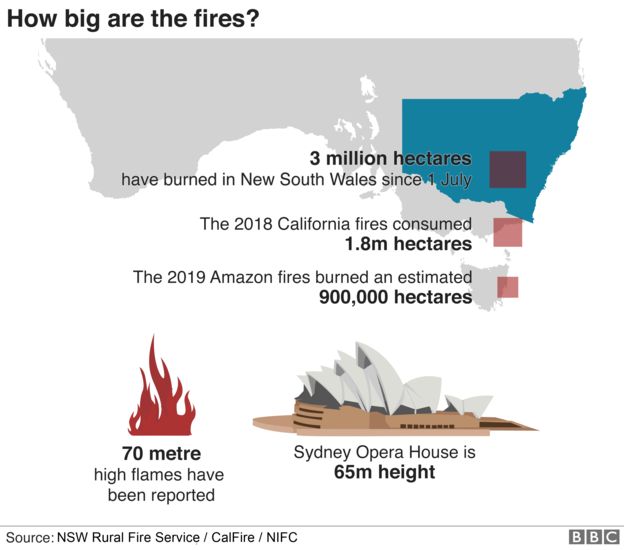
This is one of the most devastating bushfires in history! Growing to be bigger than some small European countries and burning an area the size of West Virginia. Here are the facts…
More than 15.6 million acres have been burned
Engulfed more than 24,000 square miles
Destroyed more than 1,400 homes
Below shows the comparison in size of the bushfires to other states in the US as well as comparing this fire to other devastating fires.
The “World’s largest volunteer firefighting organization” is what the New South Wales Rural Fire Service (or NSW RFS) is calling themselves. Over 70,000 firefighters from around the world have joined hands in helping combat these deadly fires. The number is only growing as well, with the continuation of these fires, more and more firefighters are volunteering their time and life.
“We’re doing it because it’s a passion. It’s a brotherhood.”
– Daniel Knox, Volunteer Firefighter, New South Wales
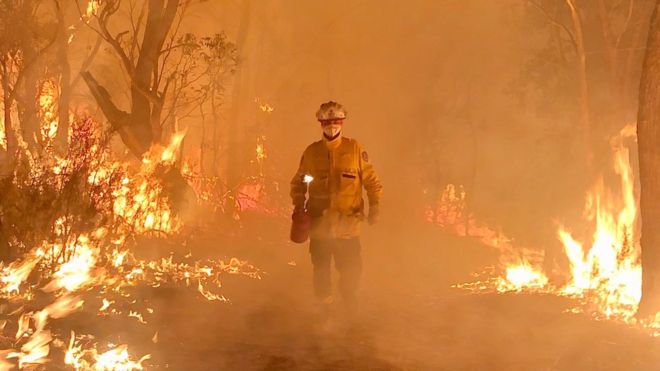
This photo of Knox was taken after his 15 hour shift battling these bushfires. Only one of thousands that has stopped their normal lives to stare death down and fight these fires. 90% of the 70,000 firefighters who are working day in and day out to stop these fires, are also volunteers. Only a few senior ranking officials are being paid for this endeavour.
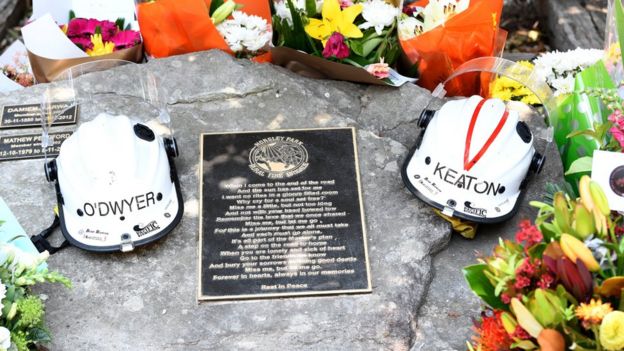
Below shows the appreciation, love, and support Sydney’s Opera House is showing all their volunteer firefighters.
SYDNEY, AUSTRALIA – JANUARY 11:(Photo by Wolter Peeters/The Sydney Morning Herald via Getty Images)
Above is a link to a video posted on twitter by the NSW RFS showing the sheer size and danger of the fires, and how brave those volunteering truly are to position themselves in this situation willingly, and without compensation.
More than 24 people have died in these bushfires. Not only making it destructive and devastating, but deadly.
How does this affect wildlife?
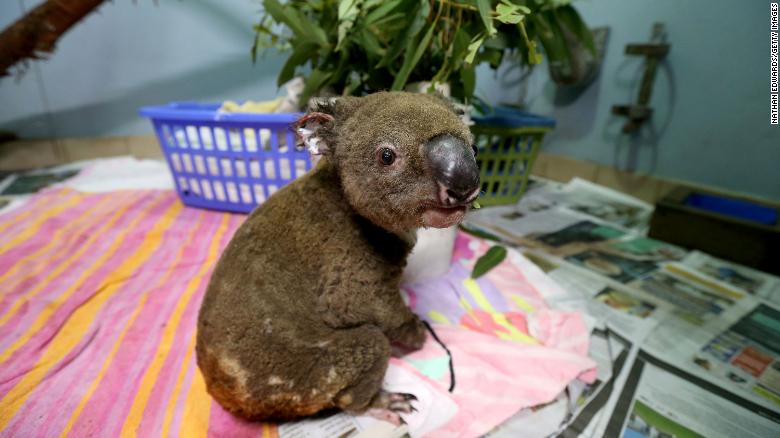
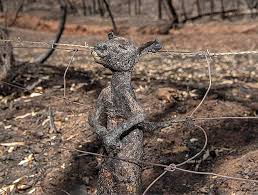
Wildlife is taking a detrimental loss due to the fires that have been ravishing for nearly four months now. An estimated half a billion animals have died in New South Wales alone. People who are close to the fires can hear the screams of Koalas in the fires yelling out for help, making a sound only made by Koalas in extreme stress and pain.
Koalas are the most vulnerable animal to these fires. Not only are they slow, but their habitat and food is trees and leaves. Their home and bodies are burning. If they aren’t killed by the fires, predators that survive easily pick off these helpless Koalas resting on the burnt forest floor.
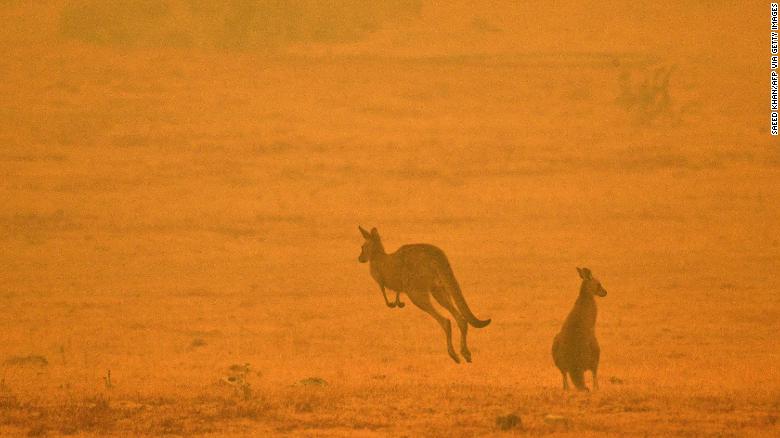
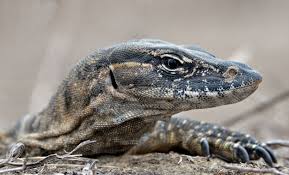
Wildlife is having to fight to survive. Kangaroos are fast, they have the ability to out run, or out hop, these fires, but they can still be trapped within the fires. Species that burrow underground, such as wombats, snakes, and the native large carnivorous reptile Goanna have a high survival rate. Although they may be burned a bit, possums are able to burrow within trees and that can save their lives.
Some species can thrive under these conditions. Goannas, get lucky with the fires that leave their prey defenseless and immobile. Birds of prey can also flourish during these fires due to their ability to evade the flames and pick off their prey after they have been hurt.
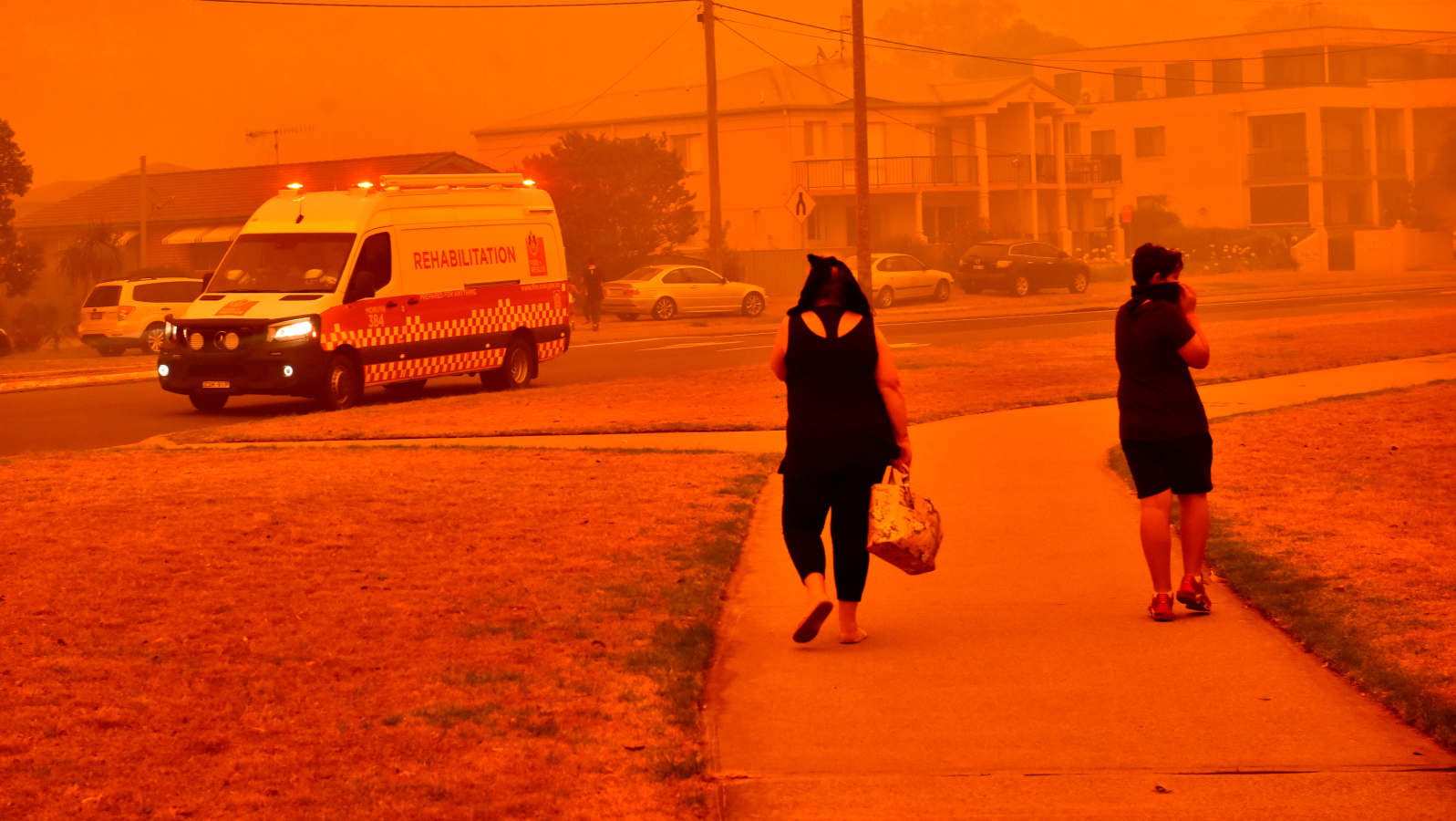
Australians have been dealing with these fires since late October. That means for the past several months, smoke from these fires has been emitted into the air, non stop. Smoke has covered the skies in cities like Sydney, Melbourne, Port Macquarie, and Canberra for months.
Not only are Australians at risk of their property being destroyed by a fire, but they now have health risks that are going to affect them in the future as well. You can see the blanket of smoke covering Sydney from fires over 50 miles away. University of NSW professor Bin Jalaludin, a chief investigator with the Centre for Air Pollution, Energy and Health Policy Research, said previous bushfire events had subjected civilians to smoke pollution for “a couple of days, a week at most”.
“I’ve been working in air pollution research since the early 1990s and we’ve not had any fires so prolonged or so extreme.”
– Professor Jalaludin
Officials in Australia have stated that they cannot know the full extent of the effects of the bushfires because they need time to pass to determine these. They hypothesize that those exposed to these fires have a higher risk of heart attack, stroke, and diabetes. The city of Canberra has been given the award for worst air pollution in the world at any time.
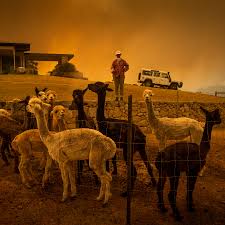
Agriculture has been widely affected by these bushfires as well. An estimated 46,000 heads of livestock has been lost directly related to these fires. Rural Australia has been affected the worst by these fires and urban areas are only getting the later effects of the smoke and the movement of displaced families to these already largely populated cities.
Tourism is a large part of the Australian economy as well. With 3.1% of Australians economy going towards tourism with an annual nine million people coming to Australia, grossing out at a total estimated $30 billion. 666,000 people work in the tourism business in Australia, and all these people are out of work with most of these tourist destinations being closed temporarily.
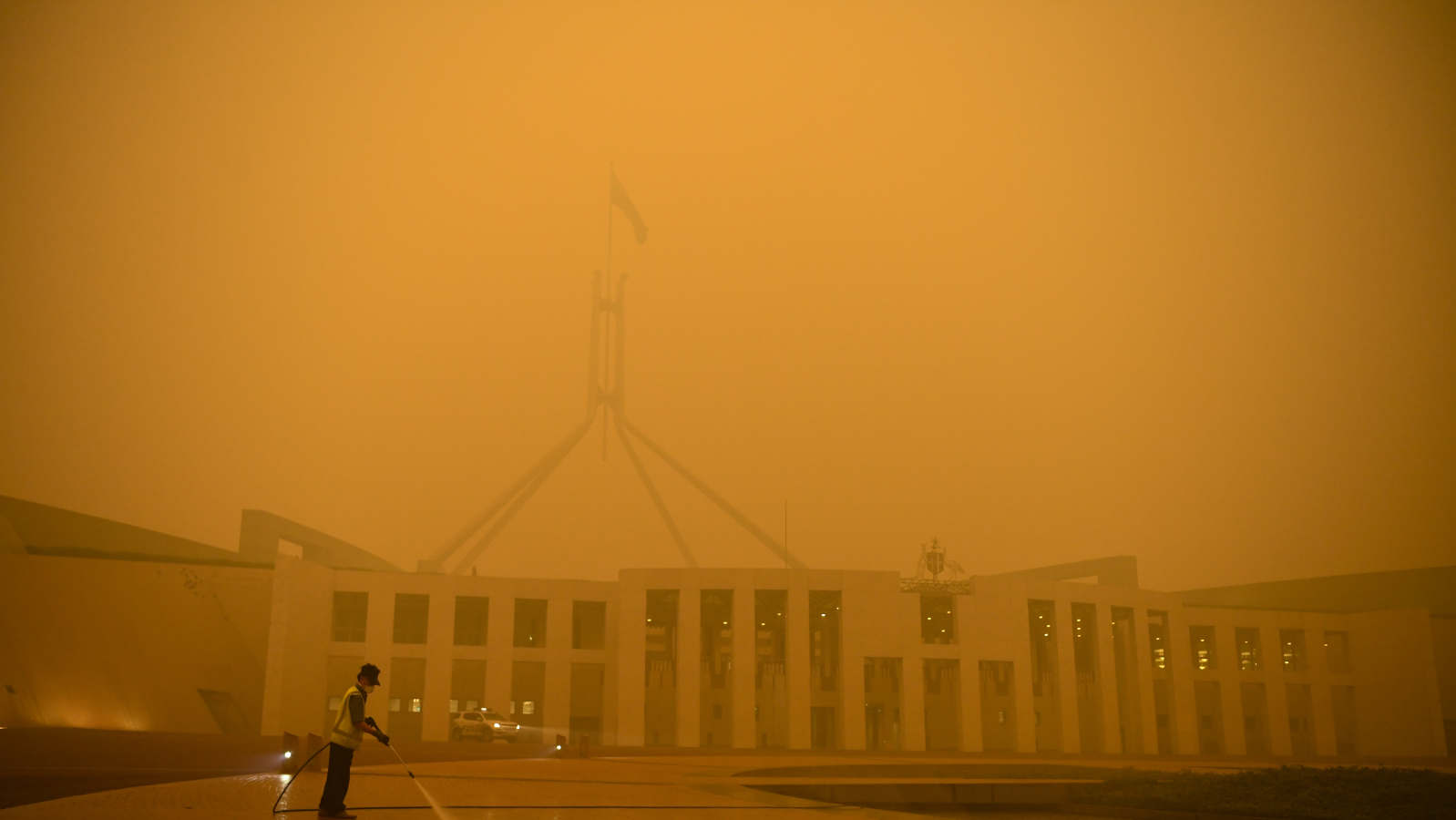
This picture shows the Parliament House in Canberra engulfed in smoke.
Not everyone can put their lives on hold and travel thousands of miles to go fight on the line of the fires like all of these brave volunteer firefighters, but there are still things we can do from home. YOU can make donations to several different organizations across Australia that are supporting different aspects in the land down under. I will leave their organization name and link below.
Australia and Australians have been fighting for their lives ever since late October when these bushfires started. Killing millions of wildlife and tens of people. Causing billions of dollars in damages and destroying everything in the fires path. Tens of thousand volunteers have fled to Australia to defend our planet against this disaster, but there is still a lot more that needs to be done.
Thank you for reading and please like, subscribe, and leave feedback!
(Sources included in links for each respective topic)
Welcome to my blog, NAShTYEarth! The only blog you need to satisfy all your curiosities about our environment. To start off, I am Landon Nash, a current sophomore, studying to do be a Business Marketing Major at the fine institution of Marian, University, Indianapolis. I am native to Indianapolis, Indiana, where I was born and raised, and have a deep love and connection for my city. (P.S. that’s me below.)
So, why am I blogging? And more specifically, why am I blogging about the environment, as a marketing major? Simple, I LOVE THIS EARTH. Nothing makes my day better to waking up to a bright and sunny day, or a light drizzle on the windows while falling asleep. Nothing compares to this gigantic round hunk of rock, floating in space, with a thin blue line that separates all of this life, from cold, bitter darkness. Yes, nothing makes my day better than waking up on this Earth, but nothing takes the sun out of my shine more than hearing about the atrocities around the globe that are affecting our environment on a day to day basis.
So why do this?
Because I want to be the window that opens up the light to my readers, so that they can independently form opinions and have the knowledge to make better choices when it comes to our environment.
Because I want to inform others of what is actually going on in the world.
Because I believe one small gesture, newstory, headline, blog post, and one small change can create a huge difference.
Because I want those who are reading to not only see our wrongdoings, but as well as our triumphs, our acceptance of our faults, and the acts of renewal and love for our neighbors and planet that go on everyday that are not in news headlines.
I would like to change the world, for the better. Small drops of water cause large ripples, and I strive to be a drop of water in my reader’s lives that ripple into changing how we view and treat our planet. You may be wondering why the title of my blog is NAShTYEarth. It’s because our Earth is NASTY, we do what we want to her and act as if there will be no repercussions. Well, my name is Landon NASH, and i will insert myself into this NASTY Earth, until we get a conversation started. Feel free to follow me on twitter for the weekly posts and email me suggestions!


:format(webp):no_upscale()/cdn.vox-cdn.com/uploads/chorus_asset/file/19577382/bush_fires_graphic.jpg)





 NAShTYEarth